Have you ever stopped mid-sentence, staring at your screen, wondering whether to type “visualise” or “visualize”? This tiny spelling difference creates massive confusion for writers, students, and professionals worldwide.
You’re not alone in this struggle. Thousands of people search for answers daily, especially when preparing important documents, IELTS exams, or professional emails. The confusion exists because both spellings appear correct to different audiences, making it difficult to know which one to use.
This guide solves that problem once and for all. By understanding the simple rules behind these spellings, you will write with confidence and avoid embarrassing mistakes. Whether you are a student, business professional, or content creator, this article provides everything you need to know about visualise or visualize.
Visualise or Visualize
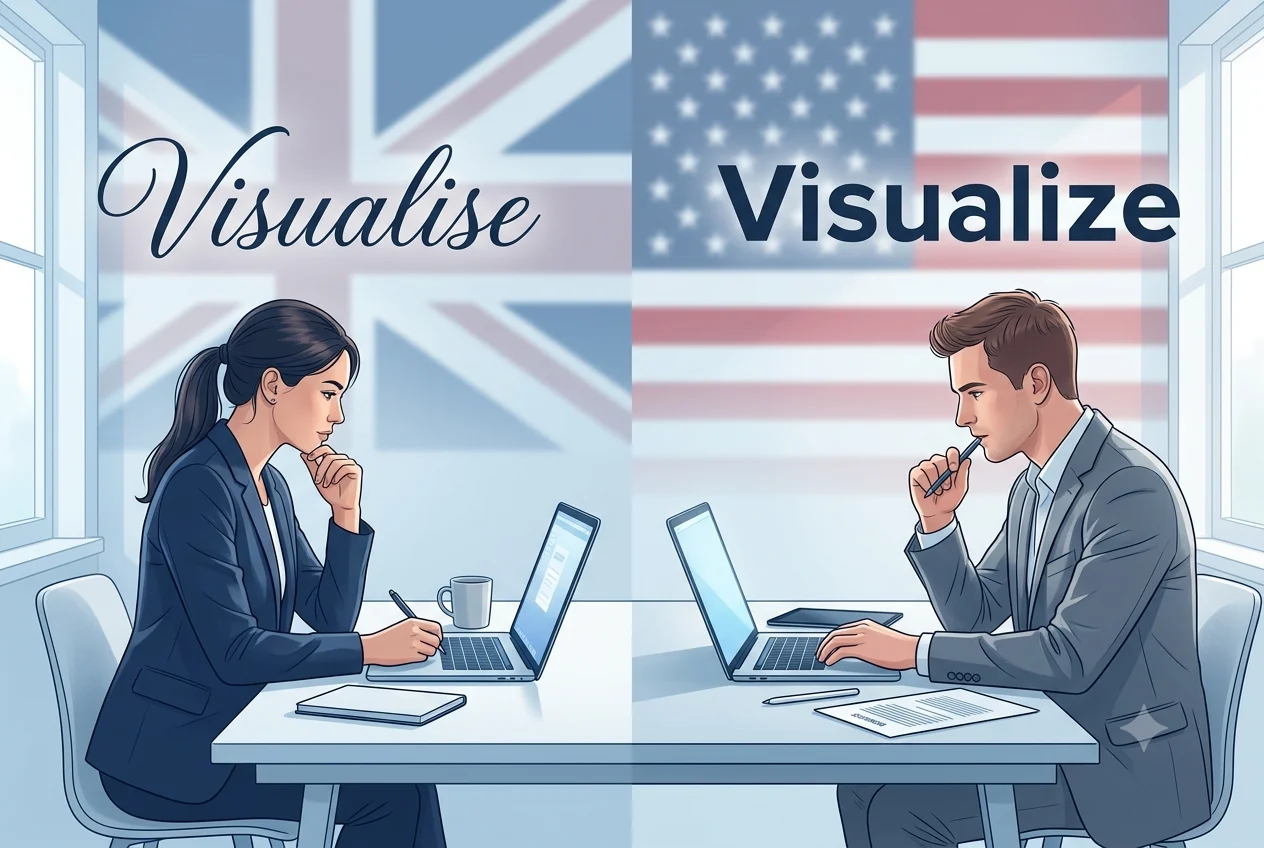
Both spellings mean exactly the same thing: to form a mental picture or make something visible in your mind. The difference is purely geographical. Visualise is the standard British English spelling used in the UK, Australia, and New Zealand.
Visualize is the American English spelling used in the United States and Canada. Neither is wrong. Your choice depends entirely on your audience. For example, a British student would visualise their career goals, while an American student would visualize the same thing. The meaning remains identical. This simple rule eliminates all confusion instantly.
The Origin of Visualise or Visualize
Understanding the history helps explain why two spellings exist. The word comes from the Latin “visualis,” meaning “of sight” or “relating to vision.” During the early 19th century, English formed the verb by adding the suffix “-ize” to “visual.” This suffix came from Greek “-izein,” meaning “to make” or “to become.”

The original English spelling was actually “visualize” with a “z.” However, British English began adopting “-ise” spellings due to French influence. Many words ending in “-ize” in Greek appeared as “-iser” in French. This linguistic borrowing created the British preference for “-ise.” Over time, both spellings became standard in their respective regions. Interestingly, some British publishers still prefer the original “-ize” spelling, following Oxford University Press style. However, most British writers and institutions now use “-ise” as the standard form.
British English vs American English Spelling
The spelling difference follows a consistent pattern across many English words. British English generally uses “-ise” where American English uses “-ize.” This pattern appears in dozens of common verbs, creating a clear rule for writers to follow.
Here are common examples showing the pattern:
| British English (-ise) | American English (-ize) |
|---|---|
| Visualise | Visualize |
| Organise | Organize |
| Realise | Realize |
| Recognise | Recognize |
| Authorise | Authorize |
| Prioritise | Prioritize |
| Summarise | Summarize |
The noun forms follow the same rule. British English uses “visualisation,” while American English uses “visualization.” This consistency makes it easier to remember. If you know the audience, you know the correct spelling. Always apply the same rule to all similar words in your document. Mixing spellings looks unprofessional and confuses readers.
Usage statistics reveal clear preferences by country. The United States uses “visualize” 98% of the time. The United Kingdom prefers “visualise” about 66% of the time, with some writers still using “-ize.” Australia follows the British pattern at 66%. Canada leans American at 94%. India shows a 63% preference for “visualize,” reflecting American media influence. These numbers demonstrate why understanding your audience matters.
Which Spelling Should You Use?
Choosing correctly depends entirely on your intended readers. Follow these clear guidelines to make the right choice every time.
Use Visualise (British Spelling) When:
- Writing for UK, Australian, or New Zealand audiences
- Preparing for IELTS, Cambridge, or other British English exams
- Following British style guides like Oxford or Cambridge
- Working for organizations that prefer British English
- Publishing in British newspapers, journals, or websites
Use Visualize (American Spelling) When:
- Writing for US or Canadian audiences
- Following American style guides like Chicago Manual of Style
- Working for American companies or organizations
- Publishing in American newspapers, journals, or websites
- Writing for global audiences with American influence
For international audiences, choose one spelling and stay consistent throughout your document. Many global publications prefer British spelling as it appears more formal and traditional. However, American spelling dominates online content due to American technology companies. Consider your specific readers and their likely preferences.
Common Mistakes with Visualise or Visualize
Writers make several predictable errors with these spellings. Recognizing these mistakes helps you avoid them entirely.
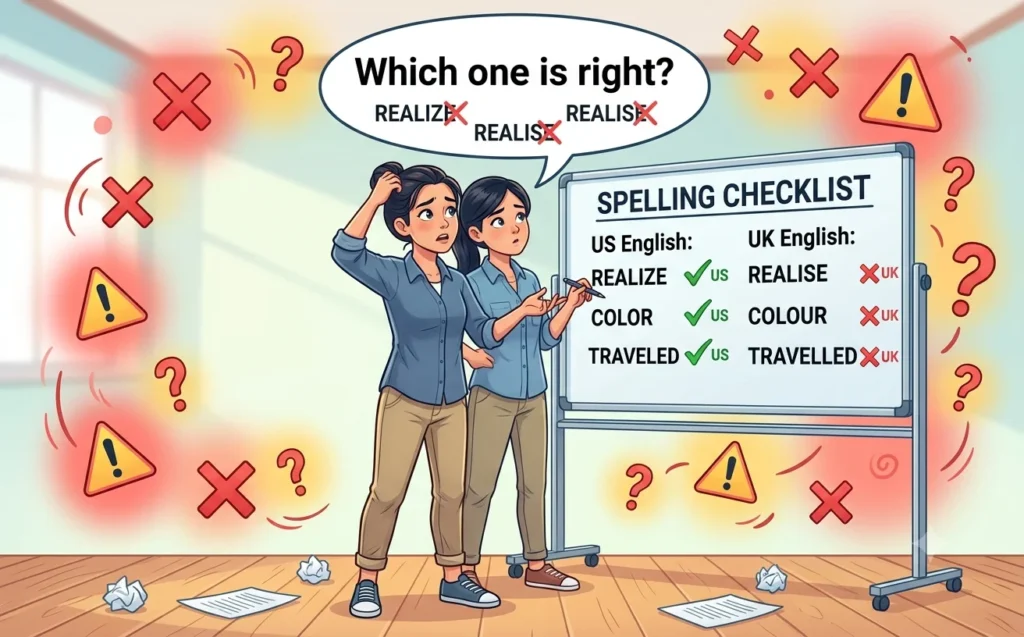
Mistake 1: Mixing Spellings in One Document
Using “visualise” in one paragraph and “visualize” in another creates inconsistency. This looks careless and reduces professional credibility. Always pick one spelling and use it everywhere.
Mistake 2: Using British Spelling for American Brands
If you write about an American product or organization that uses “visualize” in its name, always match their spelling. Never change brand names to fit your preference.
Mistake 3: Confusing Visualise with Actualise
Visualise means forming a mental image. Actualise means making something real. These are different actions. You visualise an idea in your mind, but you actualise it by bringing it to life.
Mistake 4: Assuming “-ise” is Always British
Some words always end in “-ise” even in American English. These include advertise, surprise, exercise, and supervise. Visualise does not fall into this exception category. It follows the standard rule and can use either spelling.
Mistake 5: Forgetting About Nouns
Many writers remember the verb but forget the noun forms. Visualisation (UK) and visualization (US) follow the same pattern. Apply the same rule consistently to all word forms.
Visualise or Visualize in Everyday Examples
Seeing these spellings in real contexts helps you understand their proper usage. Here are examples from various situations using British spelling.
Professional Emails:
“Please visualise the new office layout before our meeting so we can discuss potential improvements.”
News Reporting:
“The journalist used charts to visualise the economic impact of recent policy changes on average households.”
Social Media Content:
“This infographic helps visualise our company’s growth journey over the past five years.”
Academic Writing:
“The researcher employed data models to visualise complex patterns in population migration studies.”
IELTS Preparation:
“In the IELTS writing task, you may need to describe a graph that visualises statistical information clearly.”
Business Presentations:
“Let me visualise our quarterly performance using this interactive dashboard for better understanding.”
Educational Settings:
“The teacher used physical models to help students visualise abstract scientific concepts.”
These examples demonstrate that the spelling choice never affects meaning. The same sentences would work equally well with American spelling. Your audience determines which version looks correct.
Visualise or Visualize – Usage Data and Trends
Understanding real-world usage helps you make informed decisions. Data shows clear regional patterns that confirm the rules explained above.
United States: Nearly everyone uses “visualize.” American English dominates digital content, making this spelling highly visible online.
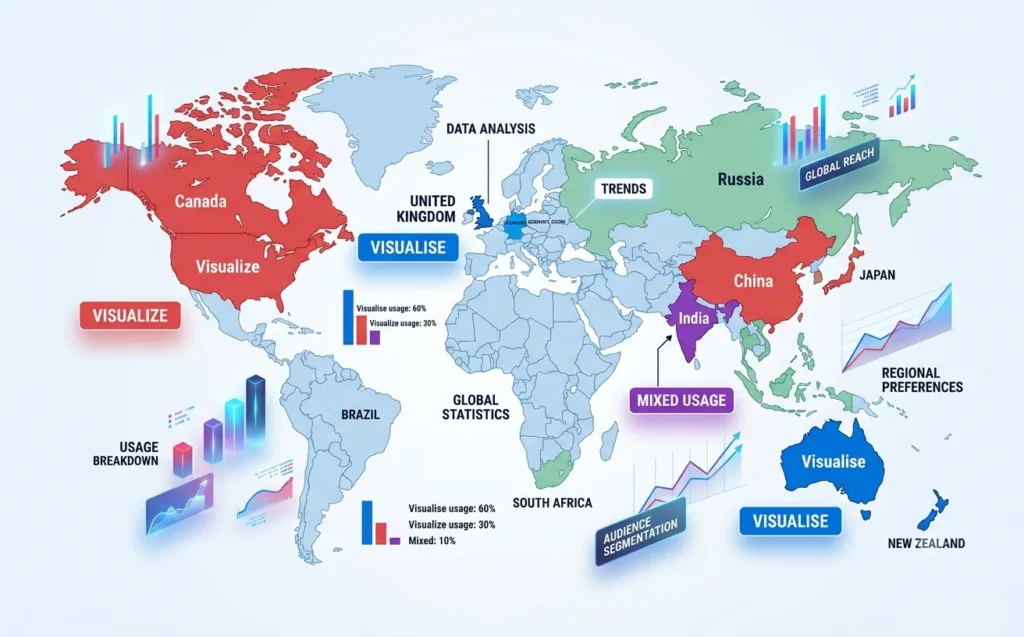
United Kingdom: About two-thirds prefer “visualise.” However, the “-ize” spelling remains acceptable, especially in academic and formal publishing.
Australia and New Zealand: Follow British conventions with strong “-ise” preferences.
Canada: Leans heavily American with about 94% using “visualize” despite British colonial history.
India: Shows interesting patterns with 63% preferring “visualize” due to American technology and media influence.
Global English: Online content increasingly uses American spelling due to American tech dominance. However, British spelling remains respected worldwide.
Search trends reflect these patterns. Americans search for “visualize” almost exclusively. Britons search for “visualise” more frequently. International users often search both terms, indicating confusion. This demonstrates why clear guidance matters for global writers.
Visualise Meaning and Synonyms
Understanding what visualise means helps you use it correctly in various contexts. The core definition remains consistent regardless of spelling.
Primary Meaning: To form a clear mental image or picture of something in your mind.
Secondary Meaning: To make something visible or apparent to the eye.
Tertiary Meaning: To predict or foresee events through mental imagery.
Common synonyms for visualise include:
- Envision
- Imagine
- Picture
- Conceptualise
- Envisage
- See
- Foresee
- Contemplate
- Dream up
- Conceive
Using synonyms can add variety to your writing. However, be careful because each synonym carries slightly different connotations. Envision suggests forward-looking imagery. Imagine implies creative thinking. Picture suggests concrete mental representation. Choose the word that best matches your intended meaning.
Visualise or Visualize for IELTS and Exams
Exam preparation requires special attention to spelling choices. IELTS accepts both British and American spellings, but consistency matters most.
IELTS Guidelines:
- Both “visualise” and “visualize” are accepted
- Choose one spelling and use it throughout your answers
- British spelling is recommended as IELTS is a British exam
- Mixing spellings may cost you marks for consistency
- The same rule applies to related words like organise/organize
Other British Exams:
- Cambridge English tests prefer British spelling
- Use “visualise” for maximum safety
- Follow the same pattern for all “-ise/-ize” words
American Exams:
- TOEFL and other American tests prefer “visualize”
- American spelling patterns are expected
- Use “visualize” consistently throughout
For students preparing for international exams, understanding these preferences helps maximize scores. While both spellings are technically correct, following regional expectations demonstrates language proficiency.
Visualise or Visualize in Professional Writing
Professional contexts demand attention to spelling conventions. Your choice affects credibility and professionalism.
Business Reports:
Choose the spelling that matches your company’s style guide. Multinational companies often specify preferences for global consistency. Follow their rules exactly.
Marketing Materials:
Consider your target audience. British consumers expect “visualise.” American consumers expect “visualize.” Using the wrong spelling can appear careless.
Academic Papers:
Follow your institution’s guidelines. Journals often specify style preferences. Consistent spelling throughout your paper demonstrates attention to detail.
Legal Documents:
Be especially careful with spelling consistency. Legal writing requires precision. Choose one spelling and apply it uniformly to all related terms.
Technical Writing:
Many technical fields prefer American spelling due to American technological leadership. However, always check your company or industry standards.
Visualise or Visualize Apps and Tools
Modern technology offers helpful tools for spelling consistency. These resources save time and prevent errors.
Spell Checkers:
Set your spell checker to the appropriate English variant. Microsoft Word, Google Docs, and other tools allow you to choose UK or US English. This automatically flags incorrect spellings.
Grammar Tools:
Grammarly and similar tools detect inconsistent spelling. They suggest corrections based on your chosen English variant. This helps maintain consistency throughout long documents.
Style Guides:
Reference guides like Oxford and Chicago provide detailed spelling rules. Having a trusted reference helps resolve specific questions.
Online Dictionaries:
Merriam-Webster (US) and Oxford (UK) show preferred spellings. Checking authoritative sources removes doubt.
Browser Extensions:
Some extensions highlight spelling inconsistencies in web content. This helps when writing in browsers or online platforms.
Conclusion
The visualise or visualize question has a simple answer. Both spellings are correct. Your choice depends entirely on your audience. Use visualise for British, Australian, and New Zealand readers. Use visualize for American and Canadian readers. The meaning never changes. The spelling difference only matters for regional consistency.
Remember to stay consistent throughout your document. Mixing spellings looks unprofessional and confuses readers. Choose one variant and apply it to all related words like organise/organize and visualisation/visualization. If you are unsure, British spelling generally works well for global audiences.
Understanding this rule removes confusion and builds writing confidence. Whether you visualise or visualize, your message will be perfectly clear. The key is knowing your audience and respecting their language conventions. With this knowledge, you can write professionally and accurately in any context.

“George Gissing writes heartfelt, clear, and relatable wishes that help readers express emotions beautifully and find the perfect words for every special moment.”